A ticket desk where the takings break down by route.
ZanBus sells seats rather than goods, so the whole system is shaped around the journey: routes, buses, and a departure on a given day. The desk issues the ticket; the office reads the week by route, and knows which ones are carrying the business.
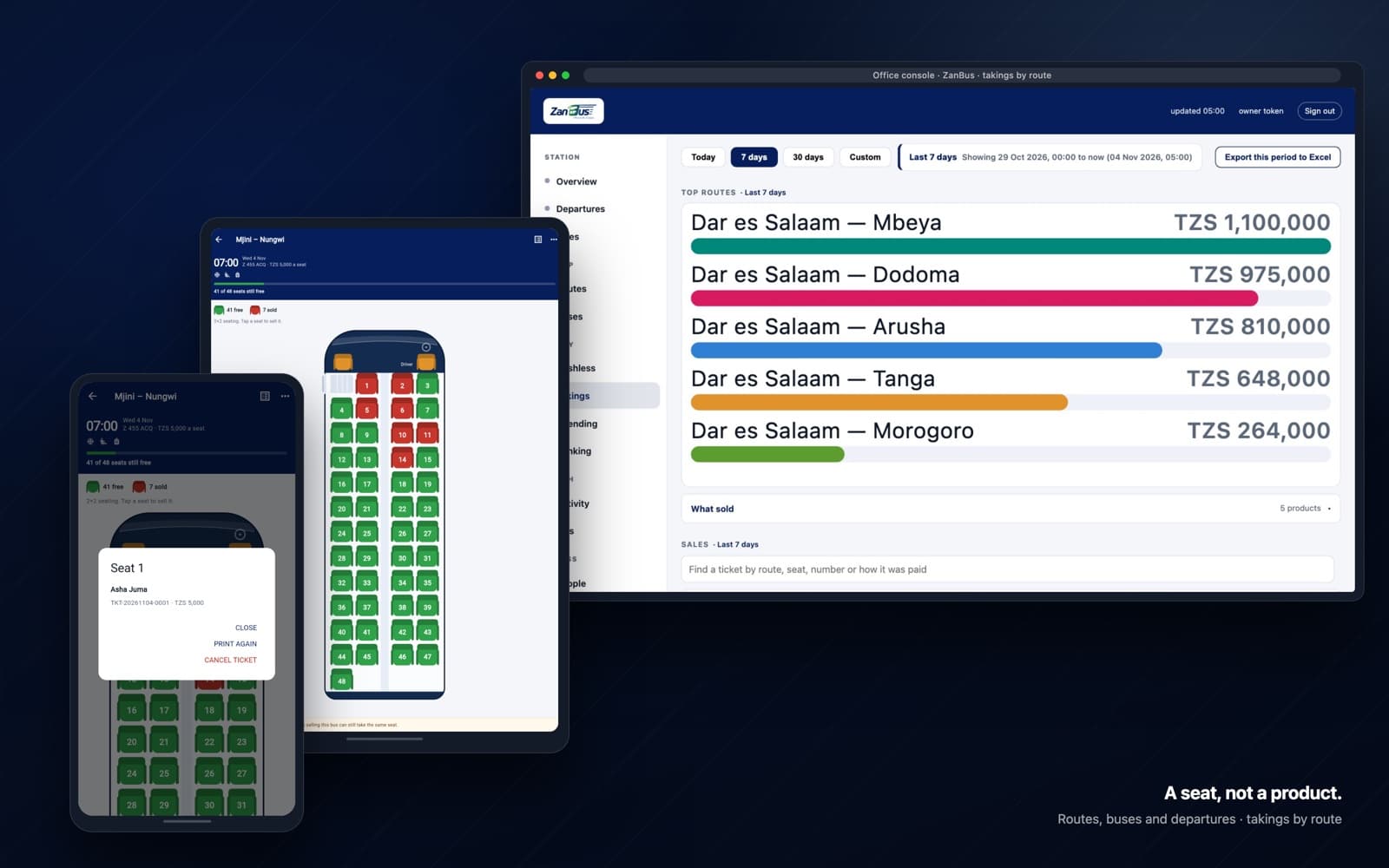
Bus ticket office · routes and departures
What ZanBus does
Routes, buses, departures
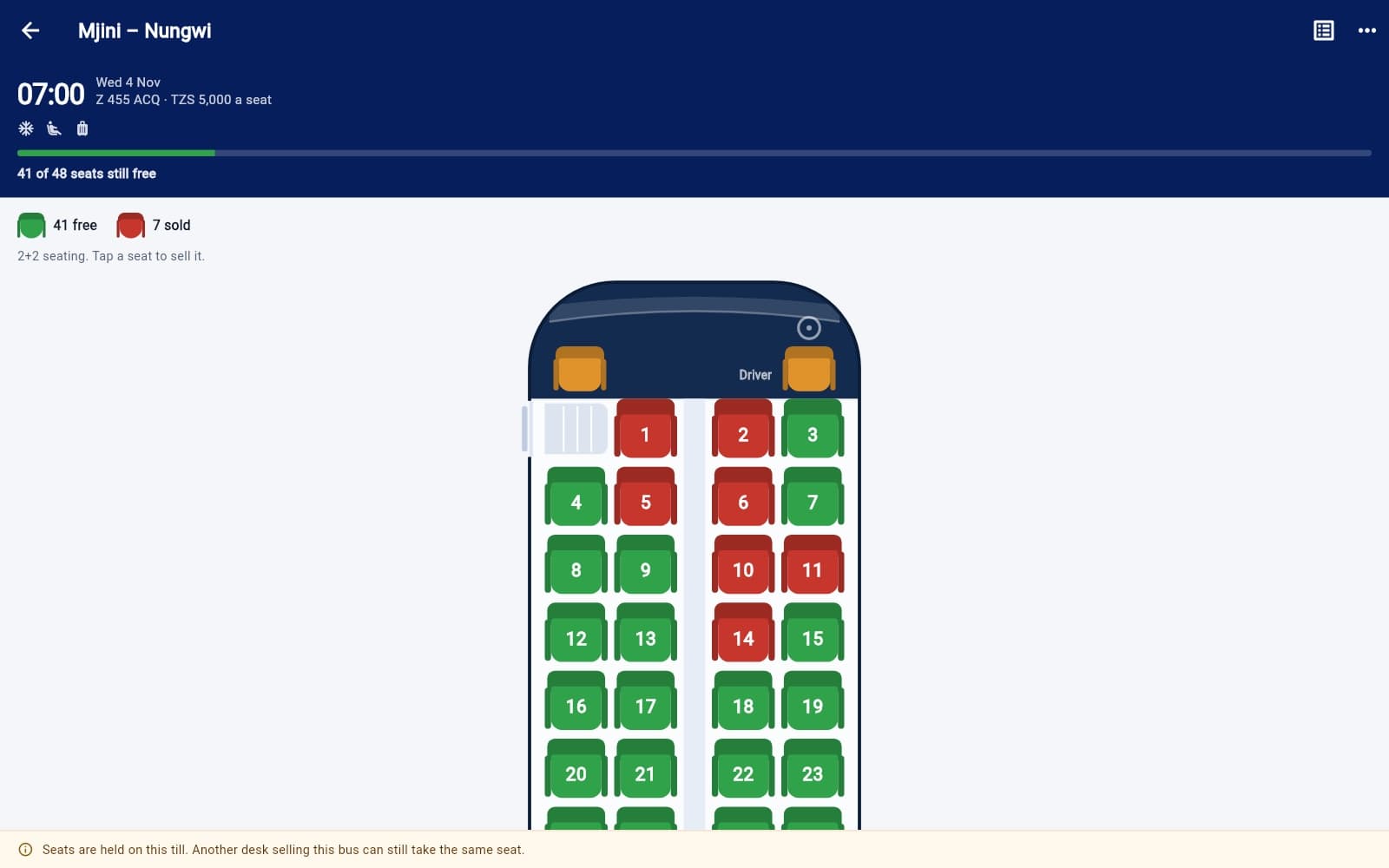
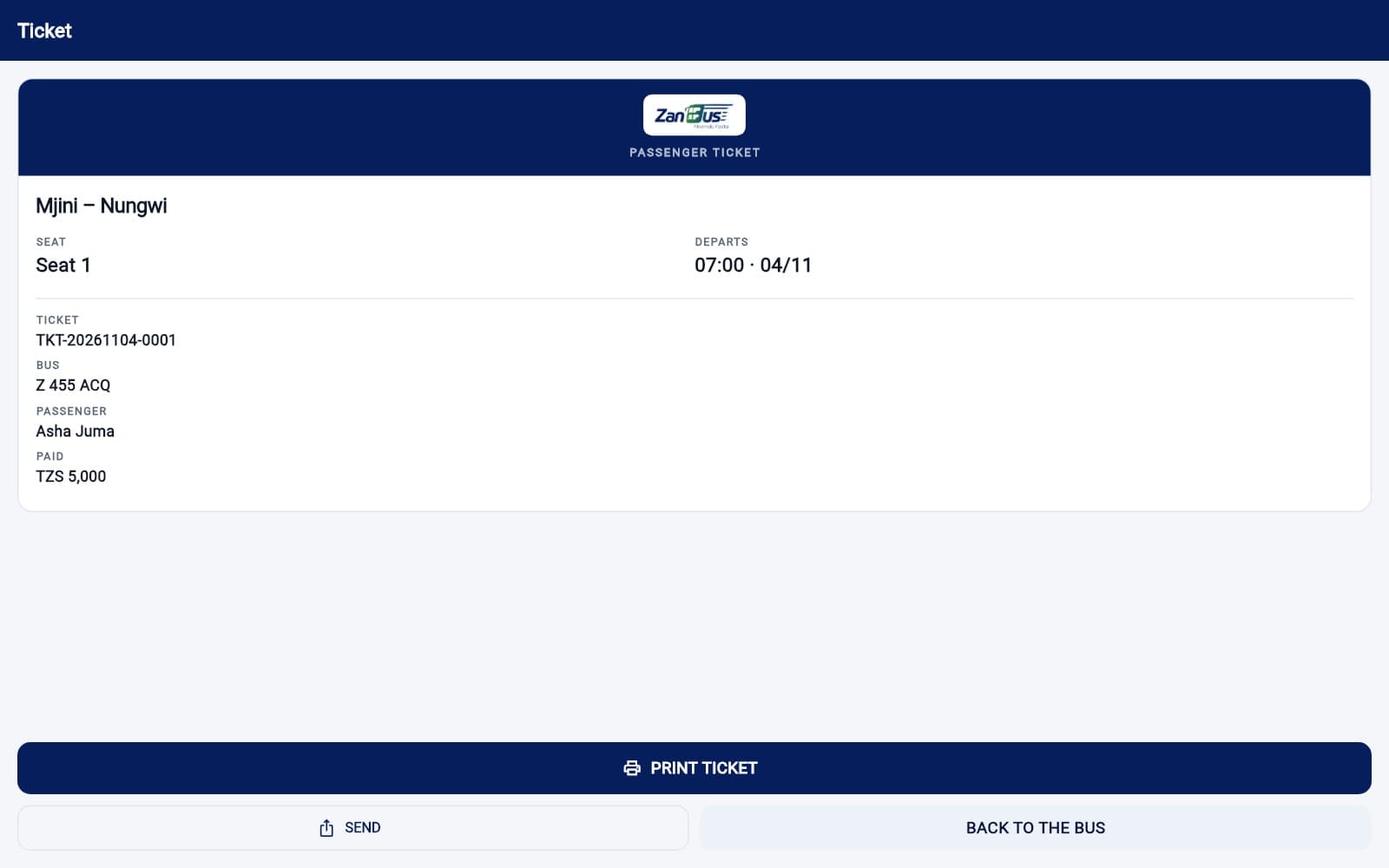
A route has a fare, a bus has seats, and a departure is a bus on a route on a day. The desk schedules it and sells against it — the ticket is always for a real journey.
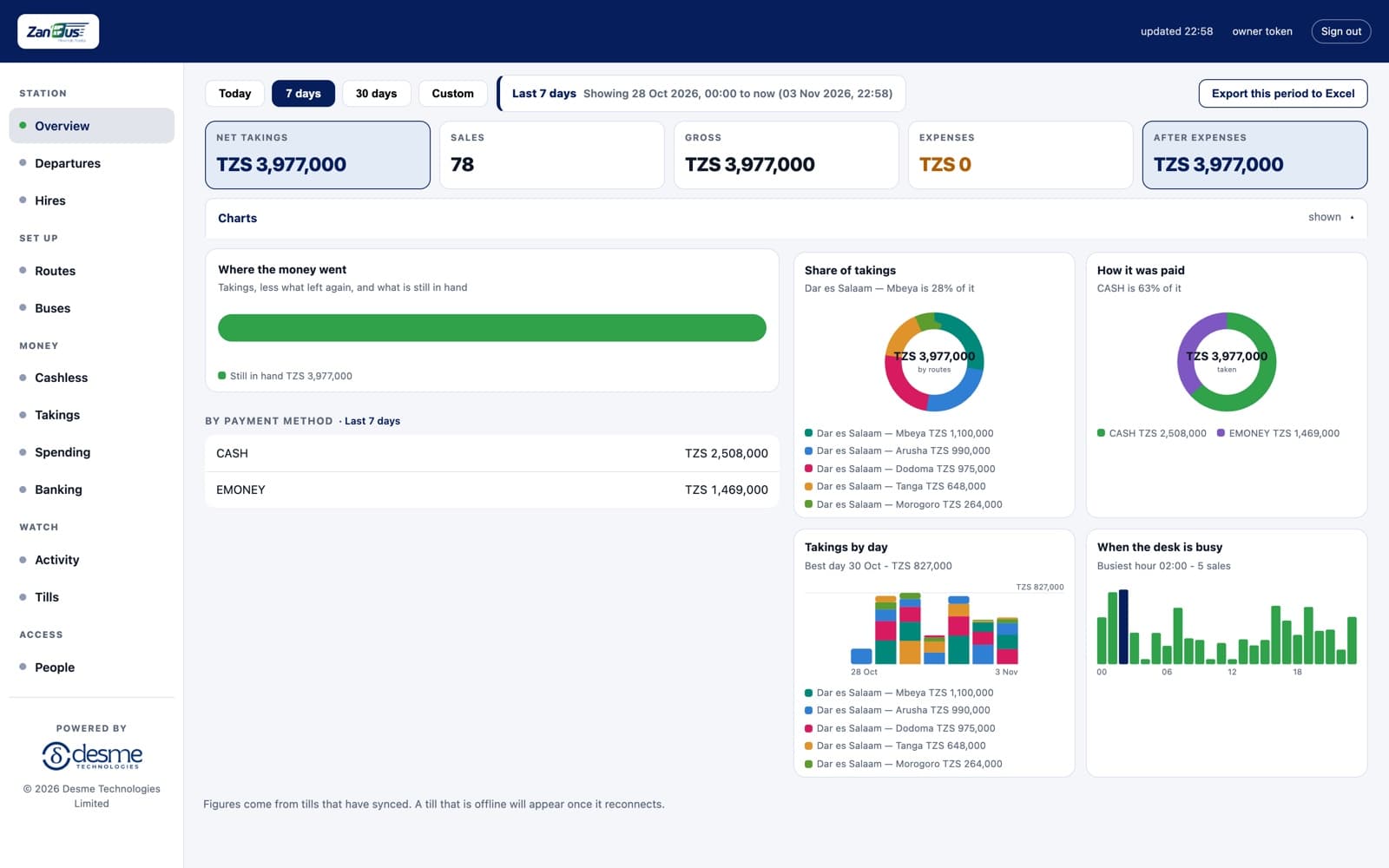
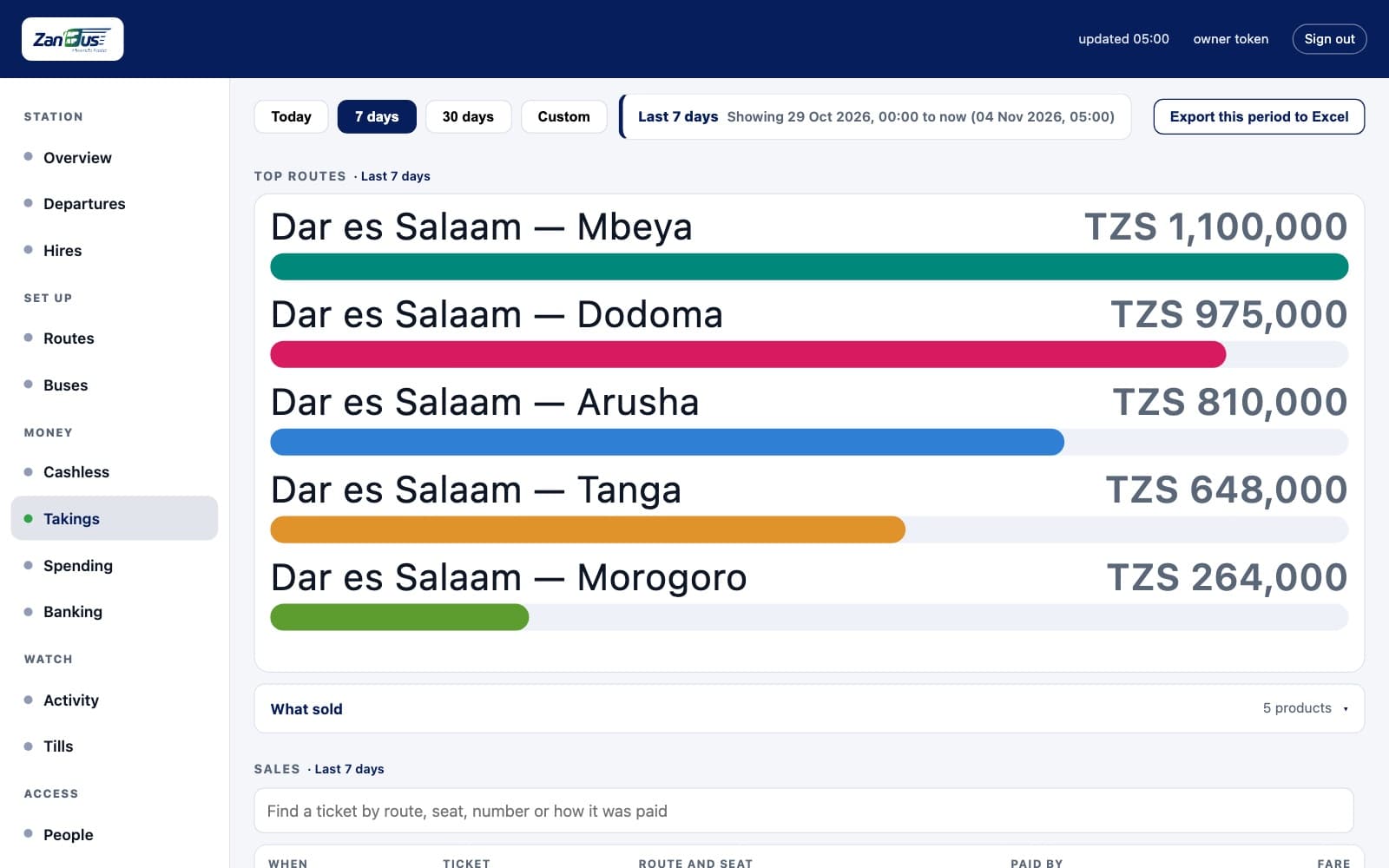
Takings by route
Where a shop breaks its takings down by product, the office breaks them down by route. It is the figure that decides which services keep running.
Cashless, counted properly
Mobile money is most of what a ticket desk takes. It is recorded against the reference on the passenger's message and reported beside cash, not mixed into it.
Private hires
A bus hired whole — for a wedding, a school, a funeral — is a different kind of money from a seat, and the office counts it as its own thing.
Sells without a network
The desk writes each ticket to its own database first, so a dropped connection never stops a passenger boarding. The office sees it when the desk reconnects.
Voided tickets leave the takings
A cancelled ticket comes out of the day's figures and is reported on its own, with the reason — so a short till is explained rather than argued about.
The owner's console
Opens in a browser, on any device. The figures are the business's own, for whatever period the owner picks.
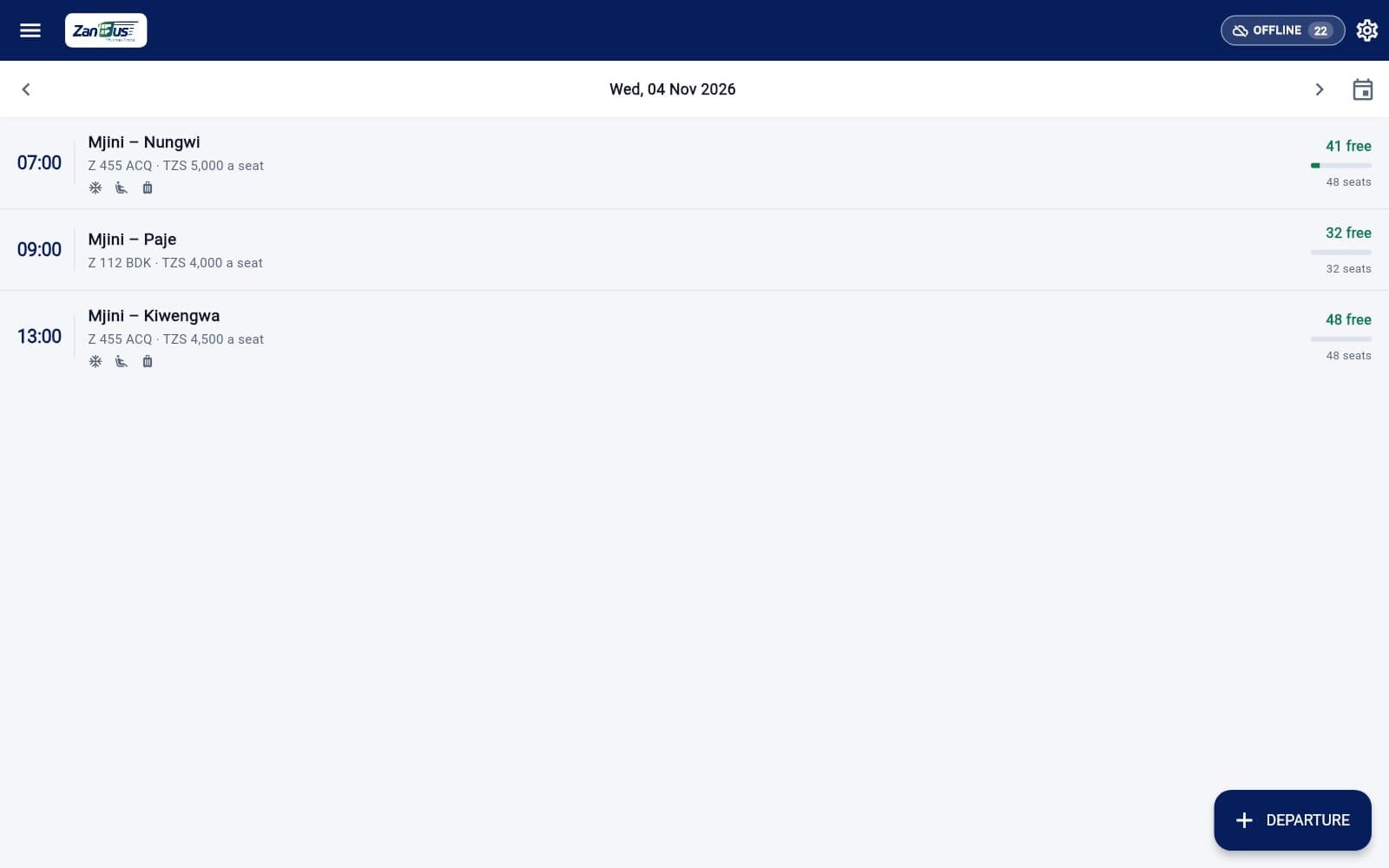
The till, at the counter
An Android terminal at the ticket desk. It opens on the day's departures rather than a product grid, because that is what a clerk is selling: a route, a bus and a time, with the seats coming from the bus on that departure.
Running a business like this one?
ZanBus is one setup of a platform we also run for a bakery, a shop, a bus office and a tailor. Tell us what your counter looks like and we will tell you what it would take.